(03) 5593 2934 | Geelong & Camperdown · Telehealth Australia-wide
Patient portal | AHPRA registered
For Providers · Clinical model

A clinician-to-clinician walkthrough.

How qEEG-guided care fits alongside primary medical and psychological care — the assessment we run, the modalities we use, and the way we report back to referring clinicians.

AHPRA-registered clinician-led Clinical-grade qEEG hardware Co-care with your GP & psychologist Geelong · Camperdown · Australia-wide
The clinical model

Examination first. Then a measurement-led plan.

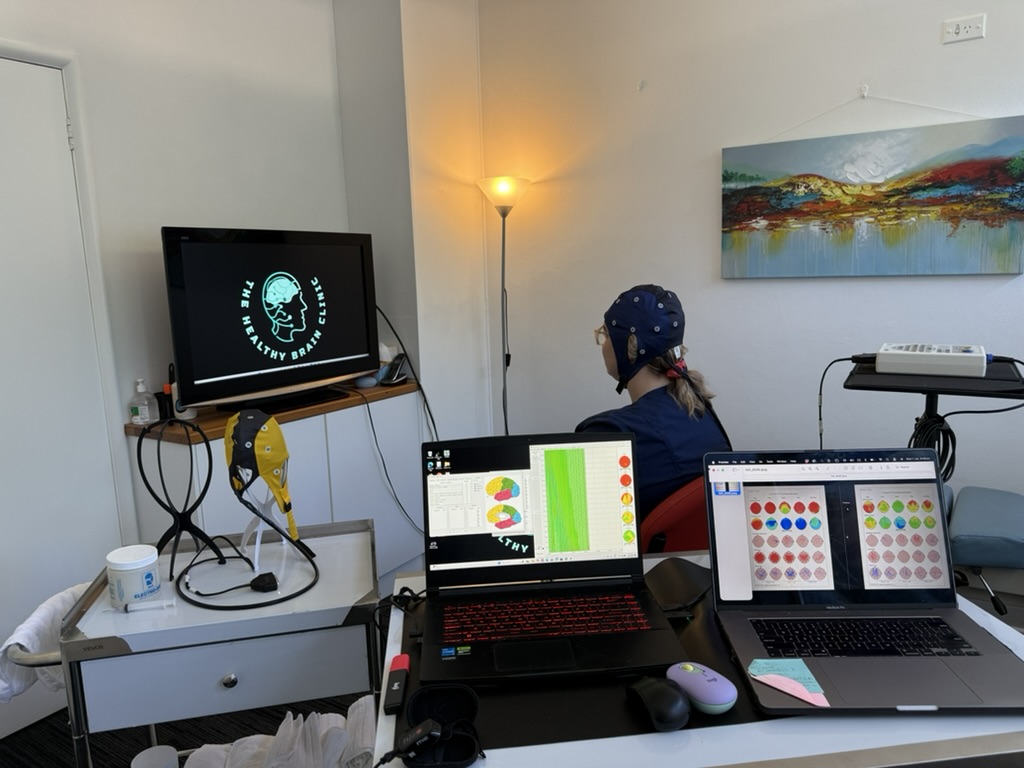
Every patient who enters our in-clinic pathway begins with a comprehensive examination — a 19-channel quantitative EEG recorded at rest and during cognitive task, autonomic markers (HRV, respiration, electrodermal), a structured intake covering medical, psychological, sleep, lifestyle and cognitive history, and validated questionnaires appropriate to the presentation.

The qEEG is processed against an age-matched normative database (Neuroguide / swLORETA source localisation) and reviewed alongside intake findings. We do not diagnose from EEG. The recording is one input into a clinical formulation that the referring practitioner receives in writing, with our reasoning, our plan, and the points where we want their input.

From there, we build a programme from the five modalities below — typically ~10 weekly sessions over 12 weeks, with a reassessment qEEG at week 11 and a side-by-side comparison report at week 12.
Modalities

Five evidence-informed tools.

Each is chosen for the patient in front of us — not applied as a package. We use what the qEEG and the clinical picture point to, and only what has reasonable evidence behind it.

1 · qEEG & swLORETA source localisation

19-channel recording analysed against age-matched norms. swLORETA estimates source-level activity for cortical regions of interest. Used for assessment, treatment targeting, and progress review — not for diagnosis.

2 · Neurofeedback

Operant-conditioning training of EEG features identified as dysregulated. Most often surface-based protocols; swLORETA-guided z-score training where the clinical picture warrants it. Sessions 30–45 minutes, twice weekly typical.

3 · HRV & autonomic biofeedback

Heart-rate variability biofeedback at resonant frequency, with respiration and electrodermal feedback. Strong RCT support for anxiety, burnout, performance under pressure, and as adjunct in trauma-focused care.

4 · Functional neurological exercises

Vestibular, ocular-motor, balance, dual-task, and cerebellar work — drawn from concussion rehabilitation and applied neurology. Particularly useful for post-concussion presentations and for patients with subtle integration deficits.

5 · Neuro-nutrition & lifestyle

Targeted dietary, sleep, and exercise input where the history indicates contributors. We work alongside GPs and dietitians; we do not replace primary medical management of nutritional or metabolic conditions.

+ Mind-body integration

Mindfulness-informed practice, breath-work, and the body-based regulation skills that pair with biofeedback. Drawn from contemplative and martial traditions, framed as skill-building, not therapy.

Reporting back

What you receive as a referrer.

  1. Assessment letter — within 7 days of the qEEG. Includes intake summary, qEEG findings (plain-language summary plus technical appendix), clinical formulation, and our proposed plan.
  2. Midpoint review — typically at session 10–15. Brief letter outlining response to date, any plan adjustments, and points where your input would be useful.
  3. Discharge letter — at programme conclusion. Final qEEG comparison, clinical observations, and recommendations for ongoing care.
  4. Direct contact — Dr Ash is available for clinician-to-clinician phone or email discussion at any point. We treat the referring relationship as primary.
Scope

What we are — and aren't.

We are a chiropractic-led brain-health practice operating within scope. The clinical model is built around quantitative EEG examination and the modalities listed above. Dr Ash Connell is the head clinician.

We are not a psychiatric, psychological, or neurological diagnostic service. We do not prescribe, taper, or manage medication. We do not diagnose neurological conditions from EEG. We do not provide standalone testimony for medico-legal claims.

For presentations outside our scope, we maintain a network of referral partners (GPs, psychiatrists, clinical psychologists, neurologists, sleep physicians) and will route patients accordingly.

Scope & safety

We work alongside — not in place of — primary medical and psychological care. We do not diagnose neurological or psychiatric conditions from EEG, and we do not prescribe or alter medication. If you or someone you know is in crisis, call 000 or Lifeline 13 11 14.

The same methodology, every tier

Examination, not assumption.

14 brain networks. Quantitative measurement at the start, the middle, and the end. Co-care with your GP and psychologist — we work alongside, not instead of.

Step 1

Examine

19-channel quantitative EEG, processed against age-matched norms via NeuroGuide. swLORETA source localisation maps activity to specific networks.

Step 2

Intervene

swLORETA-guided neurofeedback paired with HRV biofeedback at resonant frequency. Network-targeted protocols, not one-size-fits-all.

Step 3

Re-measure

qEEG comparison at mid-cycle and end of programme. If the data isn’t moving in the expected direction, we change the plan — not the calendar.

One methodology across every tier — from the free Snapshot through to the in-clinic 12-week programme.

Four tiers of care

Start anywhere. Step up when you’re ready.

Every tier uses the same methodology — examination first, then targeted intervention. Choose the depth that fits your concern, your timeline, and your budget.

Tier 0 Free · ~10 min

Brain Health Snapshot

A short educational questionnaire screening your three core networks — Default Mode, Salience and Central Executive — with a personalised starting protocol.

  • No card required
  • ~10 minutes
  • Personalised protocol emailed

Take the Snapshot →

Tier 1 $67 one-time

Brain Health Assessment

Full 14-network mapping, 16-region BRLF screening, a 30-day guided programme and content library — lifetime access, re-take any time.

  • Full 14-network mapping
  • 30-day guided programme
  • Lifetime access

Tier 1 details →

Tier 2 $249 to start, then $29/mo

Brain Health Progress

Everything in Tier 1, plus a Polar H10 sensor shipped to you, real-time HRV biofeedback in the NeuroZen app, a daily 3-minute diary, AI-driven weekly feedback and monthly progress reports.

  • Polar H10 + NeuroZen app
  • Daily diary, weekly AI feedback
  • Monthly progress reports

See Tier 2 →

All tiers complement, not replace, your GP, psychologist, or psychiatrist. We co-care.

Two ways to begin

Your brain... Your choice.

Examination, not assumption.

Take the free Brain Health Snapshot to orient yourself, or book a consultation with Dr Ash Connell. Both are easy to step away from, and either way you’ll leave with a clearer picture of what’s actually going on.

Or call (03) 5593 2934 — reception will take a few details and call you back within one business day.

Book Now